

Why We Need Queer Feminist Collective Movements
Care-centered alternatives to the deified leader
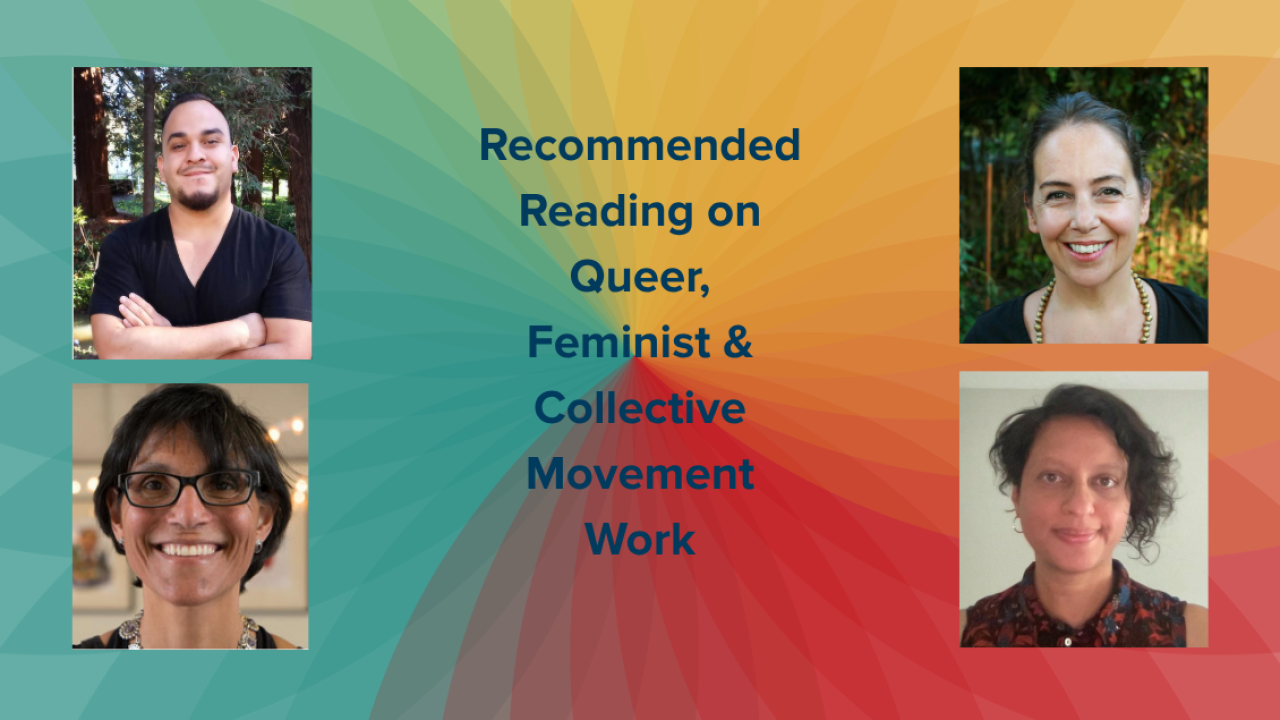
We celebrate and share the work of UC Davis feminist scholars who show us why we need queer, feminist collective movements. Take a moment to learn more about their work. They bring us hope, vision, and inspiration to continue forging paths towards liberation for all.
Jose Manuel Santillana Blanco, PhD (Assistant Professor, American Studies) researches the role of motherhood in mobilizing resistance to environmental injustices. His co-written piece titled, "Jotería Identity and Consciousness" interlaces the importance of telling histories of queer Chicana/o and Latina/o with his own familia and the role of women in his family within the farmworker's movement. His work continues to uphold the central, interconnected role of Black, Immigrant and Indigenous women in activist work as well as the vital role of queerness in disrupting structural violence. We eagerly await his book-in-progress, Radical Motherhood Ecologies, which reveals what these histories can teach us in the ongoing push towards liberation.
Erica Kohl-Arenas, PhD (Faculty Director, Imagining America & Professor, American Studies) takes a feminist, decolonial lens to examine social movements and public humanities. Her work reveals the systemic violence of dominant structures in both philanthropy and higher education. She finds hope and visions for a better future in relational, on-the-ground collective work. This is work that relies on care, creativity, and shared wisdom.
Beenash Jafri, PhD (Associate Professor, Gender, Sexuality & Women's Studies) offers us insight into what prevents alliances despite shared (yet distinctly different) experiences of colonization in her recently published book, Settler Attachments and Asian Diasporic Film. She sees possibilities for visioning beyond the dominant settler colonialism in Asian diasporic films in works of queer worldmaking and Indigenous decolonization. Dr. Jafri's book is available open source online.
Natalia Deeb-Sossa, PhD (Professor, Chicana/o/x Studies) centers care, community, and the power of testimonio in her work on the lives of Chicana/Latina feminists. She is editor of a powerful trilogy that begins with Telling to Live: Latina Feminist Testimonios, continues with Testimonios of Care: Feminist Latina/x and Chicana/x Perspectives on Caregiving, and will conclude with the third co-edited volume tentatively titled Maldito (Damned) Cancer!: Chicanx and Latinx Testimonios of Resilience, Illness and Dealing with Mortality.
Recent testimonies against Cesar Chavez remind us why we need queer, feminist collective movements. Shaping and representing movements around one key (usually male) leader not only diminishes the collective--it also weakens the movement. Let us instead learn more deeply how to work in radical collectives that respect difference while also working in solidarity grounded in respect, care, and creativity.