The United States is home to 47.8 million immigrants, the majority of which have government-sanctioned status in the country. Immigrants make invaluable contributions to society and are owed dignity, just as are all humans. Despite this, immigrants are often exploited, abused, imprisoned, and deported--often through degrading and dehumanizing processes. People are losing protected status and being swept up and imprisoned without warning. This causes severe distress to them, their community, family, and friends.
In January of 2023, I joined the Feminist Research Institute (FRI) as a research assistant and worked on a project exploring the mobility justice movement. As an undergraduate student new to research, I was expecting to mostly observe the graduate students and FRI’s Director, Sarah McCullough, as they championed the project. In most research settings, undergraduate students play minor roles and mostly observe. Instead, I became a fully integrated member of the research team, an experience that has profoundly shaped my understanding of equity, mentorship, and learning.
Is it possible to intervene in the racist zoning practices that are fueling displacement in cities across the United States? FRI Postdoctoral Fellow Kai Wen Yang’s new article in Urban Geography, Zoning initiatives, divide or unite?
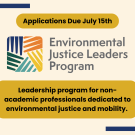
Seasoned environmental justice professionals working in mobility justice are invited to apply for the 2024 UC Davis Environmental Justice (EJ) Leaders Program. Applications are open to all California-based leaders interested in collaborating with research communities at UC Davis to enhance their community-based efforts. This year’s programmatic theme is Mobility Justice: the rights of all to access freedom of movement in different spheres of life.
Transportation equity is a priority for agencies across California. This policy brief, conducted by FRI Associate Director Sarah McCullough and C. Sequoia Erasmus, highlights the importance of distinguishing between performative and authentic equity work. Performative equity refers to actions, words, or gestures that claim to do equity work, but in practice do not improve matters for those historically oppressed, and in turn, reinforces root systems of dominance and status quo.
In order to improve transportation strategies and projects, government agencies must seek modes of community engagement, particularly with historically excluded communities of color. To understand this landscape better, and to promote just transportation planning, Rebecca van Stokkum (Geography graduate student) and I studied four successful participatory planning processes in San Francisco, Oakland, Fresno, and Los Angeles. We aimed to identify what made the processes successful and where further improvements were needed.
Associate Director Sarah McCullough and ITS graduate student C. Sequoia Erasmus recently released preliminary results of the research study, “Accounting for Sociocultural Factors and Assessing Equity in Active and Sustainable Transportation.” This study assesses the status and impact of equity work in active and sustainable transportation in California.
The FRI-sponsored Transportation Equity and Mobility Justice Working Group is gearing up for its third quarter. The goal of the working group is to provide more opportunities for students and faculty to convene and collaborate on themes and topics related to transportation equity in a dynamic and thoughtful space. It is affiliated with the Feminist Research Institute (FRI) and the Institute for Transportation studies (ITS), and includes researchers from Community Development, Civil Engineering, and Transportation Technology & Policy.